
When you’re planning a new fence for your home or business, environmental impact might not be the first thing on your mind. But with growing awareness about sustainability and the long-term impacts of our choices, more homeowners are asking: what’s the most eco-friendly fencing option available today?
The answer isn’t as straightforward as you might think. While some materials appear ‘green’ on the surface, the real environmental story unfolds when you consider their entire lifecycle.
From production and transport, to maintenance and eventual disposal, each fencing material tells a different sustainability story.
We’ll walk you through five popular eco-friendly fencing options, examining the environmental benefits and drawbacks of each – and helping you make an informed choice for your Perth property.

Why Environmental Impact Matters in Fencing Choices
Perth’s unique climate presents specific challenges for sustainable fencing materials.
Our coastal air, intense UV radiation, and extreme temperatures can accelerate material deterioration, meaning some ‘eco-friendly’ options might need frequent replacement. This creates a hidden environmental cost that many homeowners don’t consider.
The most sustainable fencing materials for our conditions typically combine durability with recyclability. When a fence lasts 30 years rather than 10, you’re spreading its manufacturing footprint across decades. Also, materials that require minimal maintenance reduce ongoing chemical treatments and resource consumption.
Bamboo Fencing: The Fast-Growing Alternative
Why It’s Eco-Friendly
Bamboo stands out as one of nature’s most renewable resources. This fast-growing grass reaches maturity in just 3-5 years, compared to 20+ years for pine timber.
During its growth, bamboo absorbs approximately 30% more CO₂ than equivalent tree mass, making it a carbon-negative building material.
Benefits
The warm, organic aesthetic of bamboo creates beautiful eco-friendly garden fencing that complements the natural environment.
Its natural flexibility allows it to handle minor ground movement without cracking, and its lightweight panels make it manageable for DIY installation across regional Western Australia.
Considerations
However, bamboo faces significant challenges in Perth’s climate. It is susceptible to cracking, warping and fading, so requires oil sealing every 1-2 years to maintain its appearance.
Under our harsh sun, bamboo typically only lasts around 10 years – which is significantly shorter than metal alternatives.
While chemical treatment improves bamboo’s resistance to pests, rot and UV damage, it still remains far less durable and weather-resistant than metal or other alternative materials.
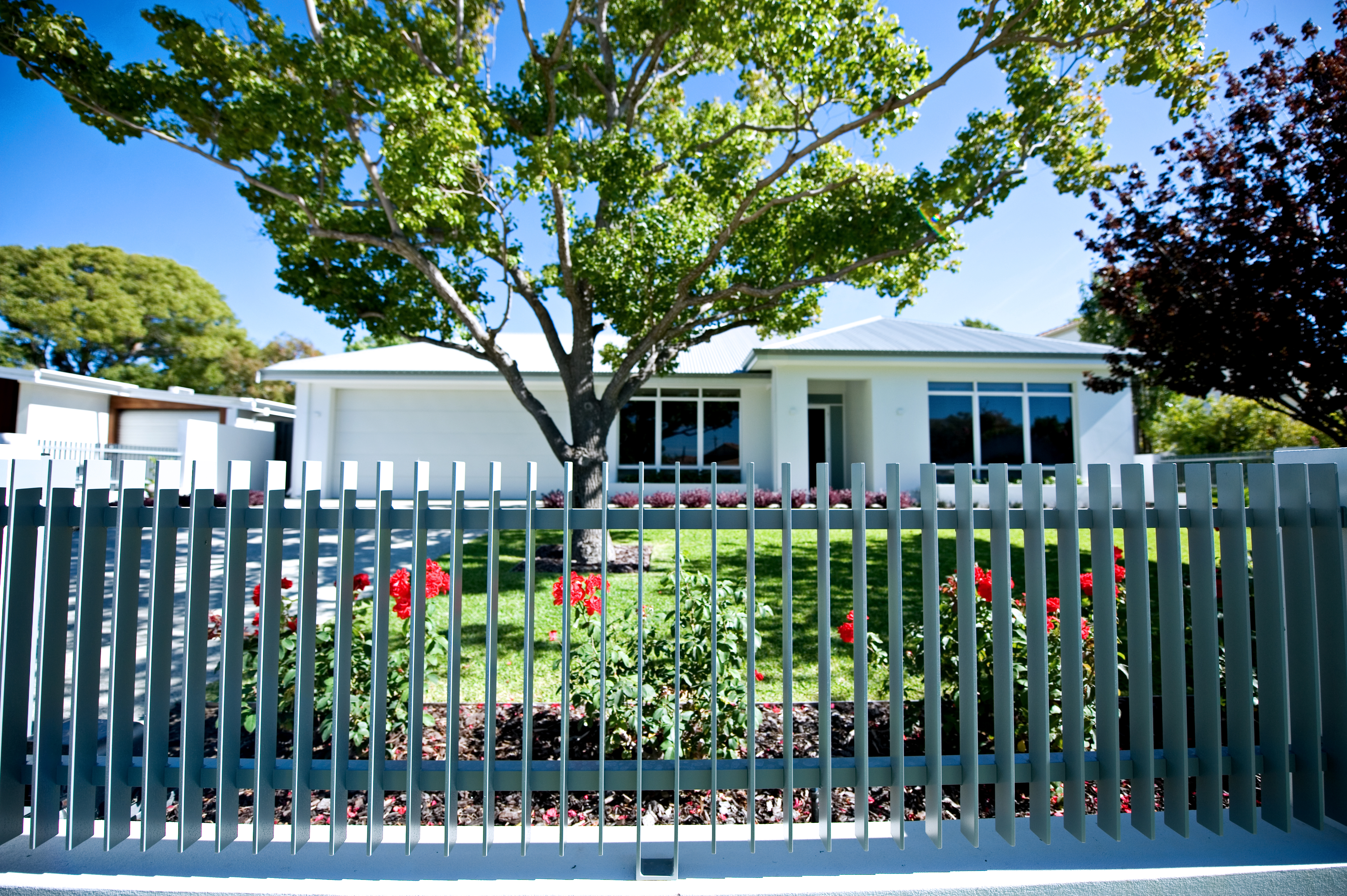
Aluminium Fencing: The Recyclable Champion
Why It’s Eco-Friendly
Aluminium represents one of the most sustainable fencing materials available.
It’s 100% recyclable (without compromising on quality), and most construction-grade aluminium already contains over 70% recycled content.
Near-zero corrosion means aluminium fences can last 30+ years – dramatically reducing replacement frequency and associated environmental costs.
Benefits
Resistant to UV, pests, rotting and warping, aluminium is ultra-low maintenance and long-lasting.
This is particularly beneficial for homeowners in coastal suburbs, like Cottesloe and Scarborough, where exposure to salt-laden air and greater humidity can speed up the corrosion process in other materials.
Regular cleaning with a mild household detergent and rinse-down with clean water will help maintain the appearance of powder-coated surface finishes and help preserve their appearance, durability & performance for many years.
Furthermore, aluminium’s lightweight and malleable nature reduces transport emissions and makes installation easier.
Finally, the versatility of aluminium fencing allows for various aesthetics, from sleek slats to decorative pickets.
Considerations
While virgin aluminium smelting is energy-intensive, using recycled aluminium significantly reduces this impact.
Also, the environmental impact of aluminium production is typically offset by its long lifespan and ongoing recycling potential.
Aluminium does have lower impact strength than steel, which might be a consideration for high-traffic commercial applications, although this rarely affects residential installations.
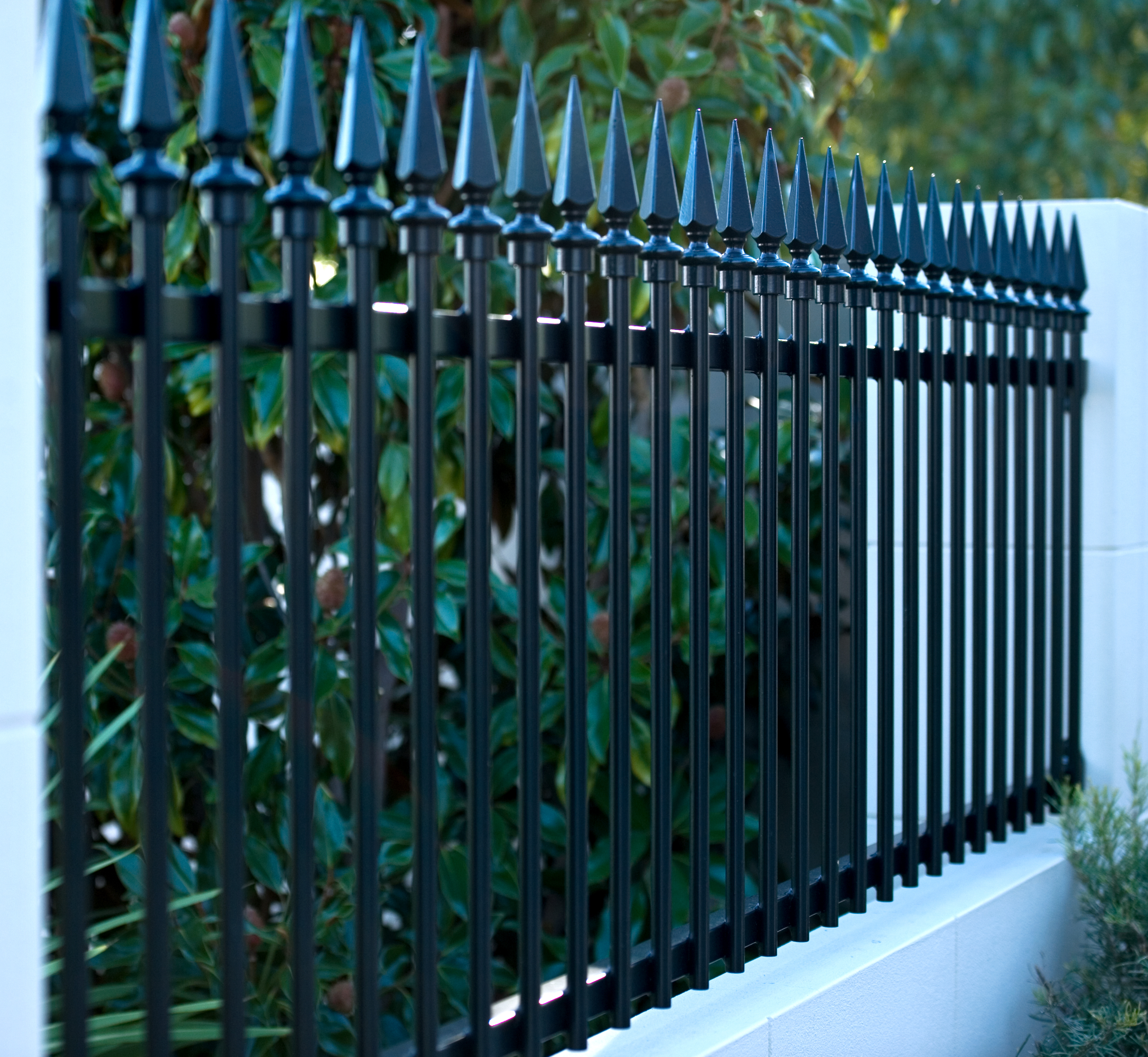
Steel Fencing: Built for Longevity
Why It’s Eco-Friendly
Steel boasts infinite recycling potential, retaining its structural integrity and performance through repeated recycling cycles – making it a truly circular material.
Pre-galvanised and powder-coated steel fencing can last 40+ years, spreading its manufacturing footprint across decades of service life.
Benefits
Steel’s high strength makes it ideal for security or public applications, such as parks and boardwalks.
It’s impact-resistant and fire-resistant, which is especially important for properties in bushfire-prone outer-metro regions.
The longevity of steel means fewer replacements over time, reducing the long-term environmental impact.
Regular cleaning with a mild household detergent and rinse-down with clean water will help maintain the appearance of powder-coated surface finishes and help preserve their appearance, durability & performance for many years.
Considerations
Steel is heavier than aluminium, requiring more energy for transport and installation.
While the galvanised coating provides excellent protection, in time occasional touch-ups may be needed at cut edges to prevent rust, although this maintenance is minimal compared to alternative materials.
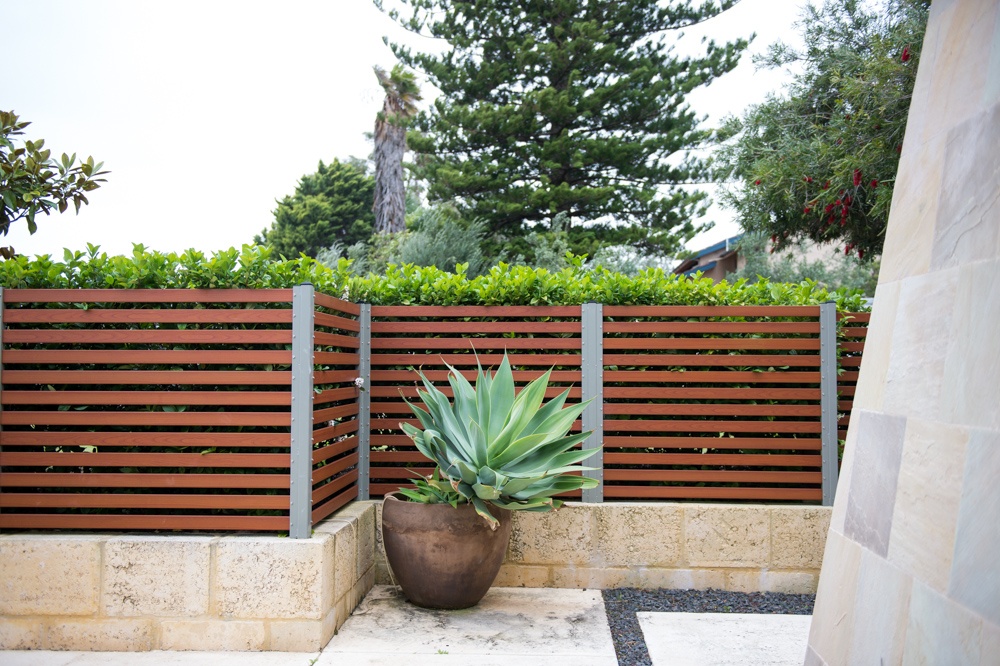
Aluminium: Timber-Look Wood Grain Finished Aluminium (Timber Aesthetics Without the Trees)
Why It’s Eco-Friendly
Our timber-look fencing range offers the warmth of natural timber without any logging or toxic timber treatments.
The powder-coat grain finish bonds permanently to aluminium, outlasting vinyl wraps and meaning no repainting is required. This creates an environmentally-friendly fencing option that looks like wood, but performs like aluminium.
Benefits
Wood-look fencing eliminates the need for sanding, staining, or termite treatments, cutting ongoing chemical use entirely.
With minimal but regular maintenance, timber-look grain finishes, coupled with the durable performance of aluminium, offer a superior performance when compared with real timber’s likely lifespan of 10-20 years in WA’s challenging climate. Timber-look aluminium offers superior long-term value while maintaining the aesthetic appeal of natural wood.
Considerations
The initial cost can be higher than certain woods, such as pine, however the total cost of long-term ownership is lower than natural timber products.
Colour options are limited to available powder-coat finishes, which may not suit every design preference.
Composite Fencing: Waste Stream Innovation
Why It’s Eco-Friendly
Composite materials transform landfill-bound plastics and wood or bamboo fibres into durable fencing products.
This diverts waste streams while creating a product that doesn’t require painting or solvent-based sealants throughout its life.
Benefits
Composite fencing resists rot, termites, and UV fading, while maintaining a consistent appearance. Many composite products can be recycled again through the same manufacturing processes, creating a closed-loop system.
Considerations
Perth’s hot summers cause thermal expansion in composite materials, which must be engineered into the installation.
End-of-life recycling infrastructure is still limited in WA, potentially requiring interstate transport.
The appearance, while consistent, may lack the natural variation some homeowners prefer.
Making the Right Choice for Your Property
When evaluating sustainable fencing materials, consider your specific circumstances and location. Most properties will benefit from corrosion-resistant options like aluminium, while bushfire-prone areas might favour steel.
For eco-friendly garden fencing in suburban settings, both aluminium and timber-look options provide excellent environmental credentials with minimal maintenance.
The WA Building Commission accepts both aluminium and steel for pool fencing applications, allowing you to meet safety requirements while supporting sustainability goals.
Commercial projects increasingly favour materials with Environmental Product Declarations, making steel and aluminium attractive for businesses pursuing green building certifications.
The Long-Term Environmental Picture
The most eco-friendly fencing option typically comes down to lifecycle, rather than initial material choice.
A fence that lasts as much as 30 years with minimal maintenance typically has a lower environmental impact than one requiring replacement every decade, regardless of how ‘natural’ the original material appears.
Perth’s climate favours materials that can handle UV exposure, temperature extremes, and coastal conditions with minimal degradation. This is why recycled-content metals often emerge as the most sustainable choice when all factors are considered.
Your choice between eco-friendly fencing options should balance environmental impact with practical requirements, including maintenance, longevity, and aesthetic preferences.
As Perth’s leading fencing contractors, Fencemakers are extremely knowledgeable in all aspects of fencing materials and components.
Our friendly team are here to help you find the solution that works best for your requirements. Contact us today for more information, or to book in a free measure and quote.